The WaterLANDS action site in Estonia is situated in the Pärnu catchment and features three restoration areas - the Lavassaare peatfields, Kikepera forest drainage areas and the Kõrsa abandoned peat extraction fields. The WaterLANDS artist in residence for Estonia, Elo Liiv, has been working with local restoration partners and local communities to explore the restoration process and the changes it brings.
From the very beginning of the project, Elo wanted to create something meaningful on-site in collaboration with the local community, and to do so in a way that would leave as small an ecological footprint as possible. As in her previous video installations, which explored themes of shadow and trace, the artist sought—within the context of landscape art—to identify a sign, symbol, form, spirit, or other presence that is both characteristic of this particular area and meaningful to the local community.
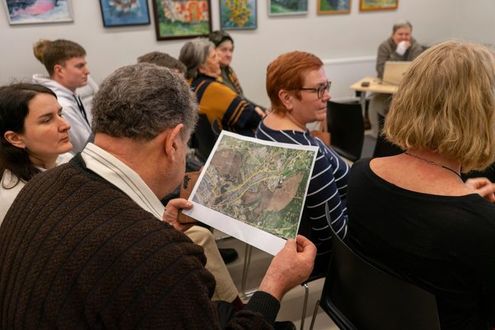
From the outset, the residency within the WaterLANDs project has been closely connected to the stories and observations of local people. To better understand the layers of landscape-related folklore and personal experience connected to the bogs, Elo convened two community meetings at the beginning of 2025—one at the Lavassaare community centre and the other at the Sindi library. These functioned as small brainstorming sessions, where participants could share memories, photographs, or observations that were important to them about areas that were soon to undergo restoration.
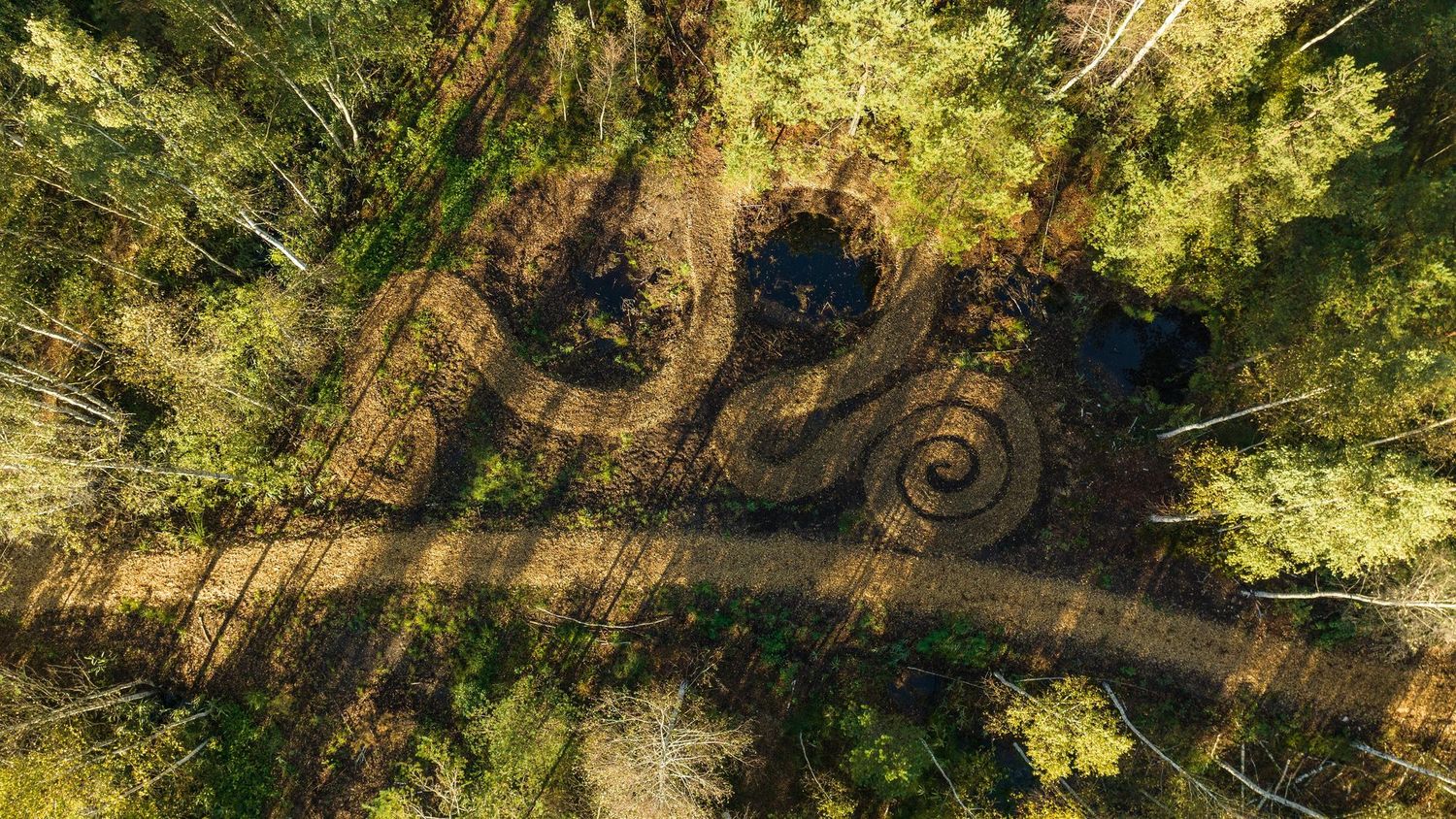
With the aim to create a local landscape artwork together with local residents, Elo asked people from the Kõrsa and Sindi regions to look for a symbol of their home bog. Based on the most frequently suggested symbols, Elo then created three designs, between which a vote was held on social media. The clear favourite was the “Snake,” as a symbol of rebirth, wisdom, health and progress, and of the continuous renewal of life and creative vitality. Places inhabited by amphibians and reptiles are clean; the drained Kõrsa wetland is in the process of being restored, and this will also lead to more encounters with them.
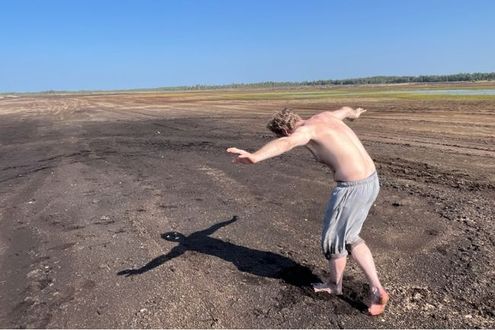
The Snake featured above was completed in autumn 2025 during the volunteer work marking the opening of the science trail. The spiral of the snake’s tail forms a sundial, whose gnomon is the shadow of a person standing at the tip of the tail. The work alludes to the former clock tower of the Sindi factory and the signals marking the start of work, lunch breaks, or the end of the working day, while also inviting reflection on the significance of the human shadow.
At present, Elo is preparing two further community landscape artworks near the Lavassaare and Kikepera hiking trails, which are expected to be completed during 2026.
One of the local restoration partners, Piret Pungas-Kohv from the Estonian Fund for Nature said, "Since I was together with Elo both at those seminars and at the volunteer work days, it was wonderful to feel how people opened up through heritage and the language of art. It was fascinating to listen to the intertwining of local relationships as revealed through the home wetland. The wood chips we used to make the snake smelled wonderfully in the rain, and the work itself was not particularly hard, yet it resulted in a beautiful, clearly visible outcome"
Learn more about the WaterLANDS artist in residence Elo Liiv here!
Photo Credits: Marko Kohv