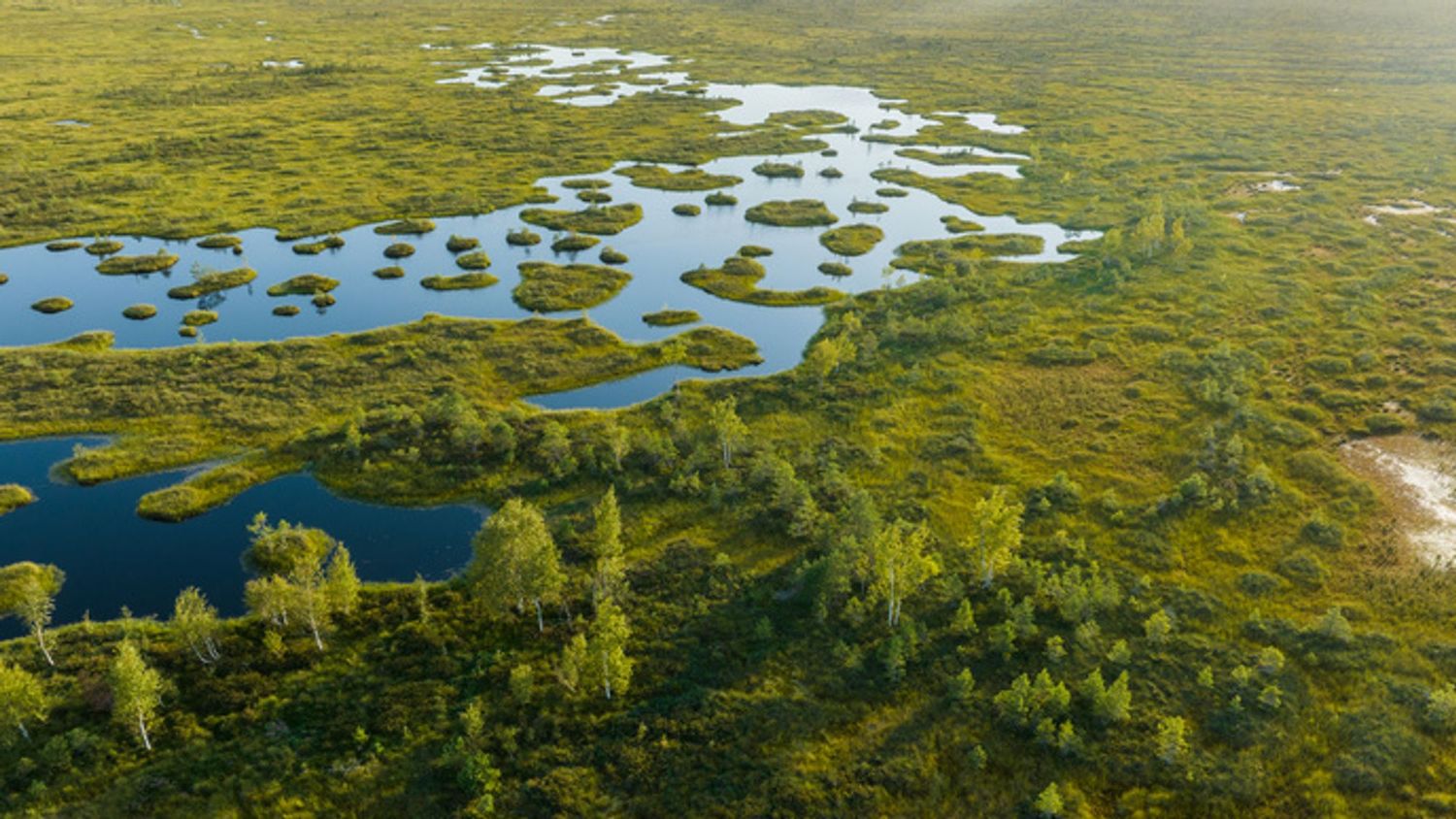
The recent WaterLANDS funded publication "Shifting climate boundaries for European peatlands" from our partners in Wageningen University was featured in a new article by the European Commission's CORDIS team, which highlights the impact climate change may have on future peatland functioning.
CORDIS highlights some key insights from the recent WaterLANDS funded study in its article, including:
- Only 7% of Europe’s original peatlands remain ecologically functional, with about 93% lost or degraded due to factors such as historic drainage for agriculture, forestry and peat extraction.
- Disproportionate climate importance: Although peatlands cover less than 3% of global land, they store twice as much carbon as all the world’s forests combined, making their protection critical for climate mitigation.
- Climate change threat intensifying: Under a 3 °C warming scenario, 92% of today’s functioning peatlands in Europe are projected to face less suitable climate conditions by 2050, with areas under clearly unfavourable conditions nearly tripling.
- Cooler, wetter regions—notably northern Scandinavia, Ireland, Scotland, and mountainous areas of mainland Europe—are expected to remain the most viable locations for peatland conservation and restoration.
- Urgent need for large-scale restoration: Degraded peatlands increase risks of drought, wildfire, erosion, and poor air and water quality, prompting the WaterLANDS project to promote coordinated, large-scale restoration that integrates ecological, social, and economic considerations across Europe.