The article, 'Charge towards green finance ignores risks of nature commodification: Evidence from the UK's climate and nature recovery policy landscape' was published in People and Nature by the British Ecological Society. A plain language summary has also been published.
The research, conducted by Professor Julia Martin-Ortega, Dr Ruth Bookbinder, and Dr Joshua Cohen from the University of Leeds, and funded by WaterLANDS, provides an analysis of the UK's Green Finance Strategy. It finds that despite the increased push for green finance instruments to fund nature recovery, little attention is paid to the risks posed by nature commodification. Through document analysis, the authors show that the strategies overwhelmingly frame risks in terms of impacts on markets and investors rather than on our relationship with nature.
Potential risks associated with nature commodification have been well documented in recent years, including concerns of land grabbing, increased inequality, and incentives to generate tradable credits instead of avoiding or reducing environmental harm in the first place. The article highlights how the green finance model expands the frontiers of commodification, turning the benefits of a healthy environment—such as carbon sequestration, water, and biodiversity—into fungible commodities for profit.
Given the slow progress to date within carbon and biodiversity markets, the authors question whether society risks too much for too little. They argue that at least as much effort, if not more, should be dedicated to imagining alternatives: experimenting with and cultivating radically different ways of perceiving and relating to nature. This includes moving beyond the human–nature dichotomy, in which nature is viewed as separate and exploitable, toward more mutually interdependent understandings that recognise a plurality of values and embed nature within decision‑making.
A symposium on social sciences and green finance for nature recovery was also held at the University of Leeds in March. Organised by Forest Research, and hosted and co‑facilitated by WaterLANDS, the event brought together government and academic representatives to discuss the challenges and implications of bringing private finance into nature restoration.
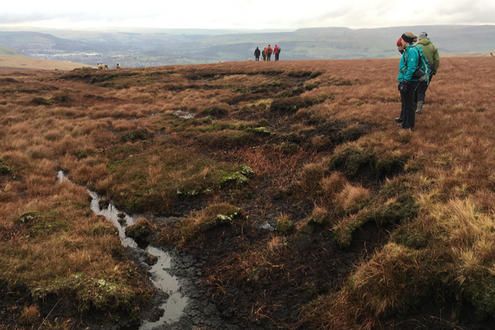
The symposium included presentations on the outcomes of WaterLANDS social science research with peatland restoration stakeholders across the Great North Bog, focusing on their experiences with private green finance. A key theme of the workshop was the role of social sciences in deepening understanding of the complex human–nature systems involved and in providing evidence to support the development of policy and practice for green finance in nature recovery.
You can also listen to a podcast that was recorded with Professor Julia Martin-Ortega and Dr Joshua Cohen on this topic last year on Spotify, Apple Music, or Youtube.