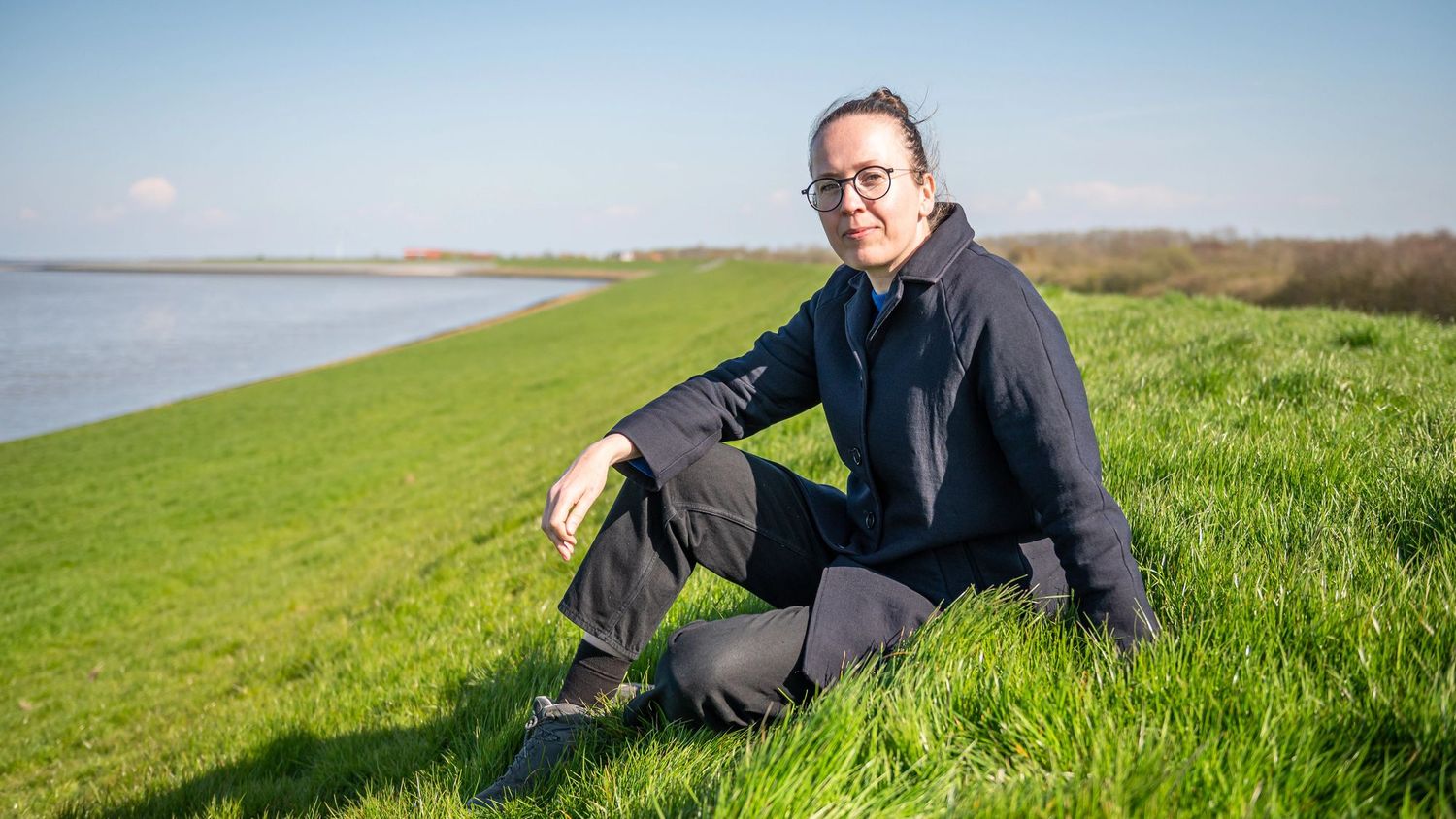
Hero Image: Marjolijn Dijkman on a dike at the Ems-Dollar estuary (Photo credit: Ems-Dollard 2050)
Renowned for its sandflats, mudflats and coastal salt marshes, the Ems-Dollard estuary is one of the world’s largest tidal areas, located on the border between the Netherlands and Germany where the river Ems meets the Wadden Sea. WaterLANDS artist in residence Marjolijn Dijkman knows the area like the back of her hand. Born and raised near Groningen, she was drawn to reconnect with this familiar landscape after a long time working abroad, first researching the effects of mining in the DR Congo, and then the intergenerational aspects of war and climate change in Verdun, France.
The Ems-Dollard is affected by numerous anthropogenic factors. Starting from the Middle Ages, salt marshes were reclaimed by building dikes and coastal peatlands were drained for agricultural use, resulting in soil subsidence. The size of the estuary has decreased due to sedimentation of sand and silt, and reclamation of salt marshes along the coast. To gain a better understanding of the crises affecting the estuary, Marjolijn explored topics such as the history of land reclamation, the disappearance of early premodern cultures in the northern Netherlands and Germany, and the rise of rational approaches to landscaping and our relationship with the more-than-human world.
What attracted Marjolijn to the WaterLANDS project and Ems-Dollard Action Site is that, to her, the site embodies a shift in mindset and relationship with water in the Netherlands. The ecological restoration around the estuary requires not just a new perspective, but an entirely new way of engaging with the environment. In The Good Ancestor, philosopher Roman Krznaric uses the Netherlands’ history of dike construction as an example of long-term thinking and intergenerational responsibility. While this is an important perspective, it is now understood that climate change demands a more fundamental shift. It demands that we step away from the traditional European view of controlling land and instead work towards restoring both the landscape and our relationship with the more-than-human world.
“Ecological restoration here is also a form of cultural unlearning. After centuries of dividing land into ‘manageable’ parts, projects involving depoldering ask if we inhabit the Earth as participants, not as controllers or managers.”
This aspect fits well into Marjolijn's artistic approach, where collaboration and interdisciplinarity are key. Within her projects, she develops alternative perspectives on how human stories weave into the broader material, environmental, and interspecies networks. Her works invite audiences to engage in direct experiences that aim to enhance their empathy for their surroundings. They usually take the form of long-term research projects in which multiple outcomes collectively tell different parts of a larger narrative. These projects take shape in various media, including film installations, sculpture, photography, performance, and discursive events.
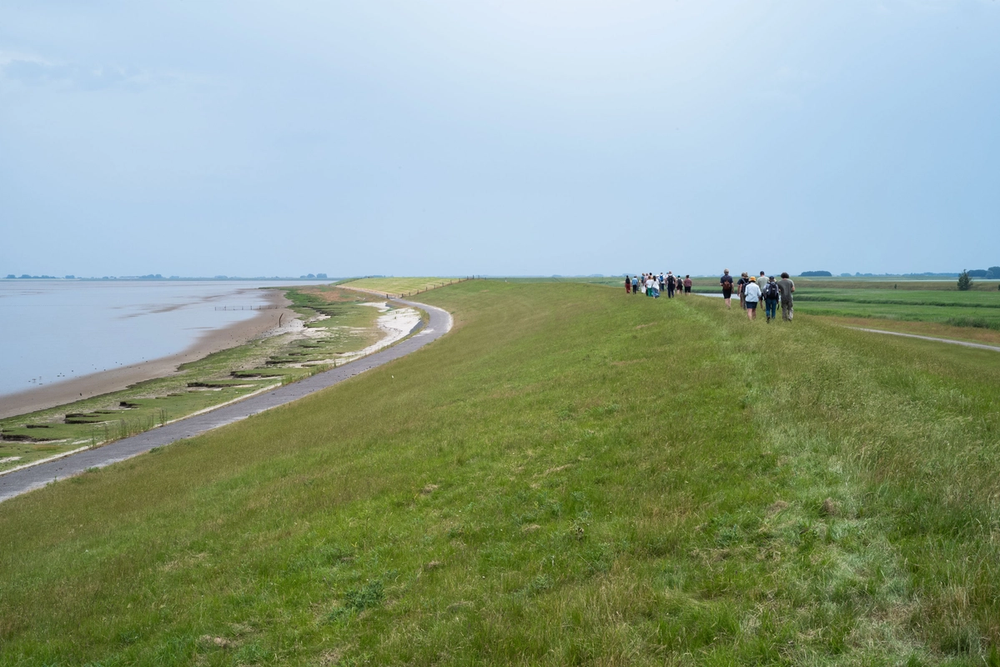
Image 1: DE SLAPER Documentation of ‘De Slaper’ (The Sleeper), public walk and talks with invited guests Eric Brinckmann and Mans Schepers, 2024 (Photo Credit: Wim Dijkman)
Marjolijn’s work in WaterLANDS
Marjolijn’s work around the estuary as part of WaterLANDS is extensive in scope and interdisciplinary in approach. It has been shaped by ongoing dialogue with a wide range of artists and researchers, including ecologists, philosophers, hydrologists, anthropologists, historians, morphologists, physicists, engineers, and computer scientists. She has visited the researchers in their workspaces at institutions like Deltares in Delft, Wageningen University, KU Leuven, and the University of Groningen. Meeting them in their labs and offices gave her valuable insights into their methodologies and the tools they use, such as morphological and hydrological models that reveal how silt movement and estuarine turbidity are predicted through large-scale data computations. The site visits and walks, collecting silt samples, and working with microorganisms have given Marjolijn a closer connection and embodied engagement with the landscape and its sediments.
“When I started my residency, I was already interested in silt and turbidity as phenomena to work with, but I didn’t really know much about silt. I was quite surprised to learn that people’s perception of silt around the estuary is quite emotionally charged and polarised: some see it as a protagonist with opportunities for dike engineering or land reclamation, while others view it as an antagonist, toxic, or even a threat to communities.”
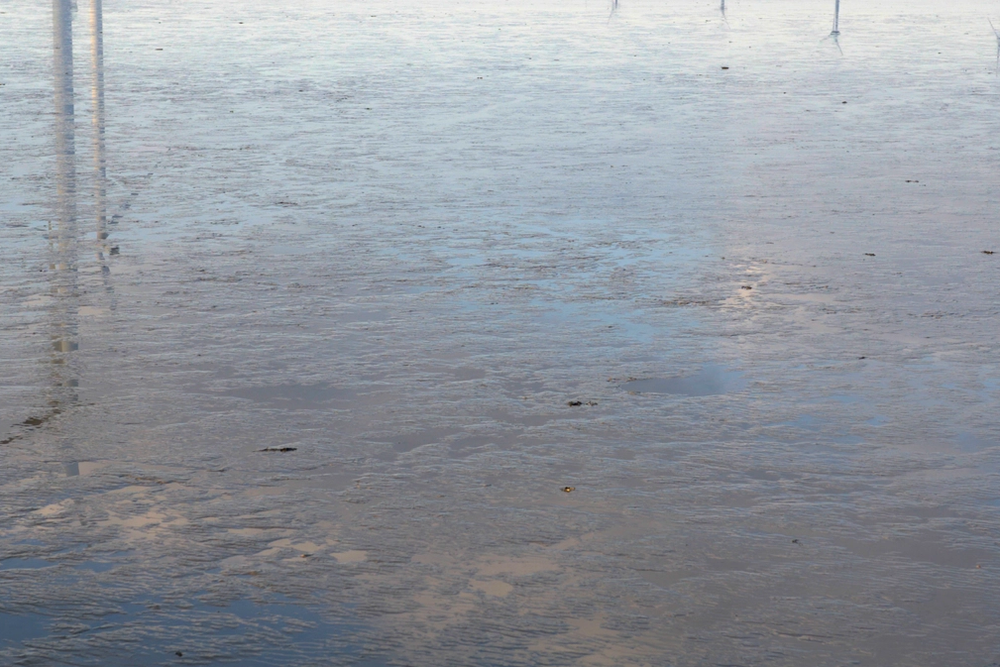
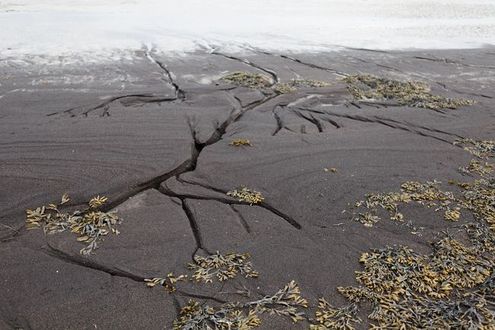
Image 2: Turbid Tides filmstill, Marjolijn Dijkman, work in progress
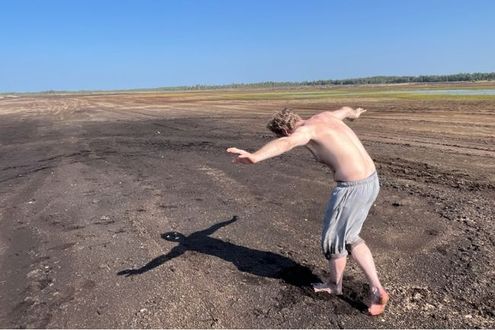
Because of this experience, Marjolijn was interested in learning more from the silt itself and letting it guide her process. Her current artistic project, “Turbid Tides”, is an outcome of this exploration. It aims to tell an intuitive and imaginative story about the turbidity of the water in the Ems-Dollard estuary. It portrays silt as a subject, a community of microorganisms, an archive of elements and traces, and a symptom of the disrupted relationship between human inhabitants and the more-than-human world. As part of this work, Marjolijn is planning to organise two participatory outdoor events to reflect collectively on the cable bacteria in the estuary. Cable bacteria are abundant, filamentous microorganisms found in the often highly silty sediments of the Ems-Dollard estuary, which conduct electrons like natural wires - hence the name. “Turbid Tides” speculates on the increasing siltation of the estuary alongside the growing influence of computational thinking, with silt, data, and energy as its main protagonists. As project outputs, Marjolijn plans to produce an essay film, an installation, and a publication that explore these shifts in thinking about sentience, intelligence, and our place in a more-than-human world, all within the context of the estuary.
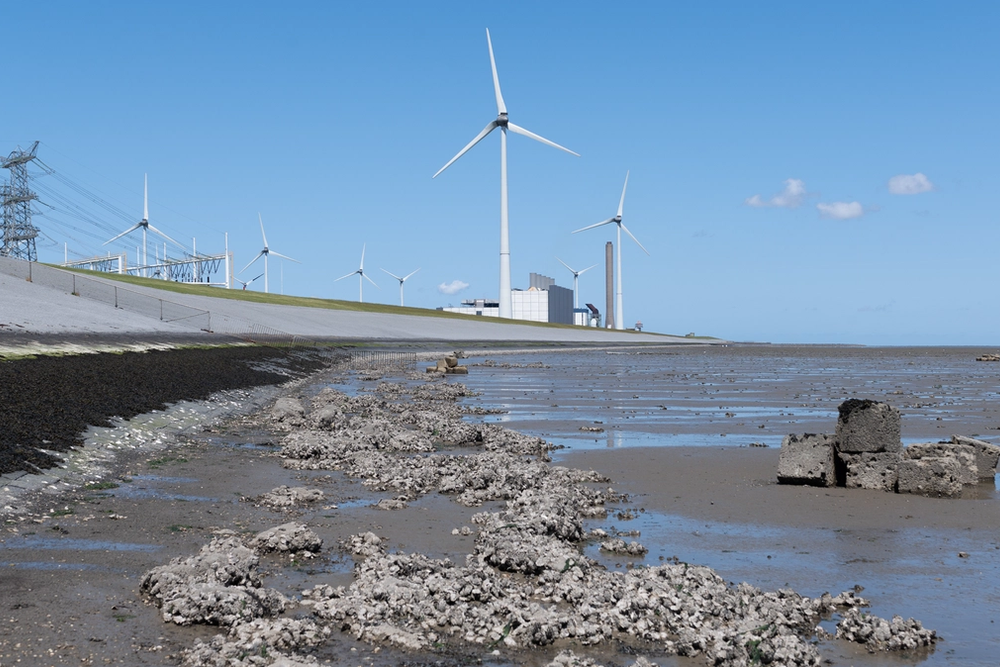
Image 3: Turbid Tides filmstill, Marjolijn Dijkman, work in progress
Another part of Marjolijn’s research has focused on different formats to engage with communities and other researchers during intimate and public fieldwalks. She developed public walking events in different areas in Ems-Dollard titled ‘Waker, Slaper, Dromer’ (Watcher, Sleeper, Dreamer) that reflect on ecological restoration and depoldering in the context of the Ems-Dollard estuary and the surrounding landscape in northern Netherlands. The series of three outdoor walking events is inspired by the old names and functions of dike systems in the Netherlands. Here, the ‘watcher’ first protects against the outside water, and the inland ‘sleeper’ catches any breach. Behind this sleeper sometimes lies another ‘dreamer.’ The events are centred around walking, actively observing elements in the landscape, and exploring the broader context of the estuary from the perspectives of the ‘watcher’, the ‘sleeper’, and the ‘dreamer’ in the broad sense. These events connect artistic research, dike construction, ecology, philosophy, and regional history, offering an in-depth look at the landscape through contributions from various experts, each with their unique and local knowledge. The third walk, ‘The Dreamer’, will take place in 2026.
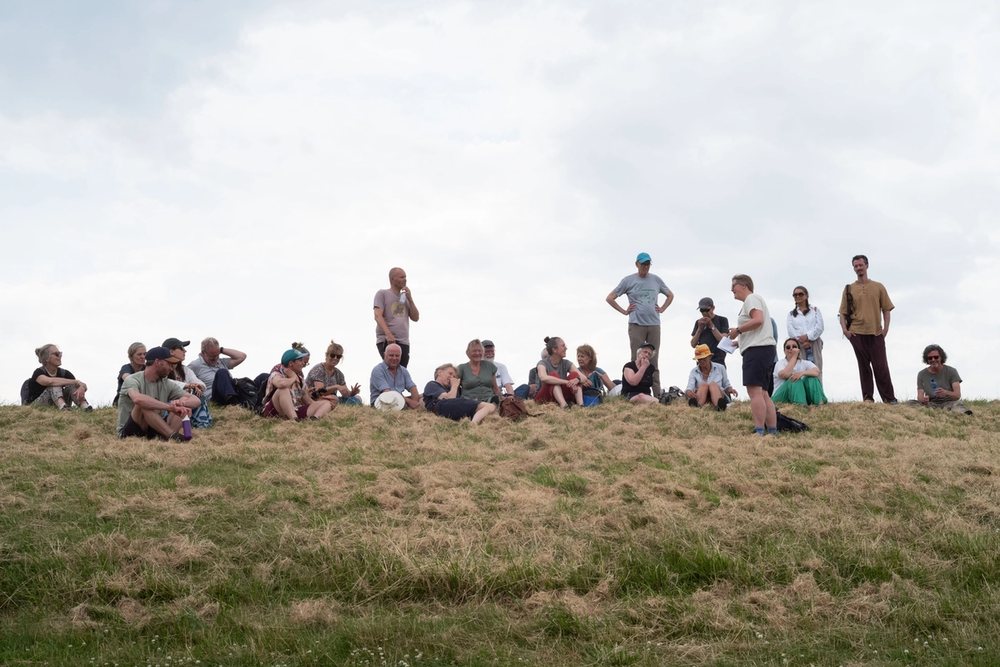
Image 4: DE SLAPER Documentation of ‘De Slaper’ (The Sleeper), public walk and talks with invited guests Eric Brinckmann and Mans Schepers, 2024 (Photo credit: Wim Dijkman)
“These walks have become an engaging way to build a community around the research project, with several people participating twice already and sharing articles and other information, such as old maps and photos, with me afterward. The walks have allowed me to connect with people in a way that feels immediate and grounded, breaking down the barriers that sometimes exist between disciplines or between experts and the public.”
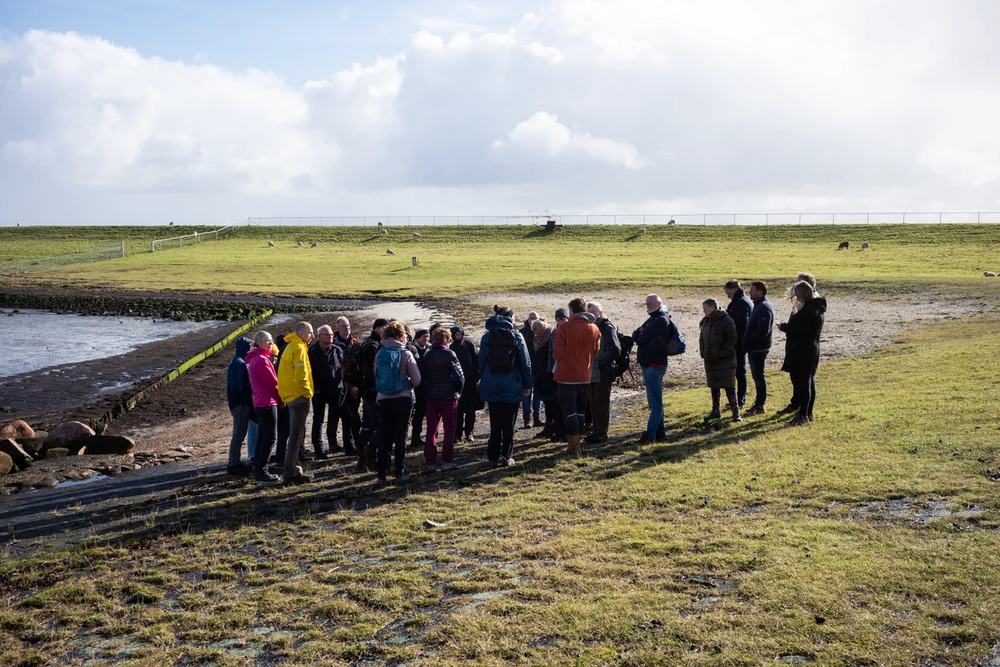
Image 5: DE WAKER Documentation of ‘De Waker’ (The Watcher), public walk and talks with invited guests Carla Alma and Lotte Jensen, 2025 (Photo credit: Wim Dijkman)
Artistic Background
Marjolijn’s artistic practice often takes the form of long-term research projects where collaboration and interdisciplinarity are central elements. Her previous work has focused, for instance, on the expansion of Rotterdam’s harbour in the Netherlands, microorganisms in the context of the Oslo fjord in Norway, and the impact of the ‘green’ energy transition and mining activities in DR Congo within the collective project “On-Trade-Off”. For the “On Trade-Off” project, she worked with an electro-technician to create works in which electricity itself becomes an agent in the artistic process. They developed adapted high-voltage photography techniques with touchscreens from phones or computers, and sculptural installations featuring artificial fulgurites formed by electricity. These works draw inspiration from the captivating magic of eighteenth-century Enlightenment demonstrations, but also critically examine the structural power of electricity and its ties to resource extraction and exploitation.
Most recently, she’s been exploring the impacts of drought and climate change in the “Zone Rouge” - former WWI battlefields near Verdun, France. The project titled “Between the lines” explores the ongoing struggle to address the lingering remnants of World War I amid the global climate crisis, which has transformed this landscape on a monumental scale. One outcome is a sound and film installation, in which trees from a clear-cut forest are adapted to form a robotic drum orchestra that accompanies a film.
Learnings from WaterLANDS
What Marjolijn has found particularly rewarding in the WaterLANDS project is the ability to share insights from her residency and research with other artists and in other projects. It has allowed her to extend her engagement with the site and support other artists' voices and perspectives, engaging with the estuary's context. The residency’s extended timeline also meant that Marjolijn was able to witness seasonal changes, follow the years of construction of the restoration projects on site, and develop her project as the landscape itself shifted.
“It has been amazing to spend so much time on research and engagement without the immediate pressure to produce work. This is very different from most residencies or projects I have participated in, where there is often a limited research time and a clear deadline for new commissioned works.”
Through the extensive network she established during her WaterLANDS residency, Marjolijn has become part of several other initiatives connected to the Ems-Dollard estuary, including collaborations with other artists or researchers she met in the process. One of them is the one-year research project “Silt Whisperers” curated by Ruby de Vos at Hanze University in Groningen. The title for this project came from an encounter at a community meeting near the estuary, where someone described Marjolijn as a “silt whisperer”. Together with three Groningen-based artists and two local partners, she will develop a series of workshops that explore how artists can make more-than-human perspectives on silt tangible and relatable.
In collaboration with posthuman anthropologist Annelies Kuypers, Marjolijn will also convene a panel at the upcoming POLLEN 2026 conference on political ecology in Barcelona. For this, they selected artists and scholars from diverse disciplines and geographical backgrounds whose contributions address the manifold relations and manifestations of soil, including its material forms and its role in shaping social and ecological worlds. The experiences from the POLLEN panel will feed into Marjolijn’s next WaterLANDS events, centred on cable bacteria living in the silt of the Ems-Dollard estuary.
The WaterLANDS residency and research will also inform a series of presentations and exhibitions Marjolijn is currently working on, including her PhD research “Beyond the Ruins of the Future” at LUCA School of Arts / KU Leuven.
“Even if the WaterLANDS project ends at the end of this year, it will have a long-lasting impact on my practice and upcoming projects, and I will continue my engagement with the estuary and its inhabitants, human and more-than-human.”
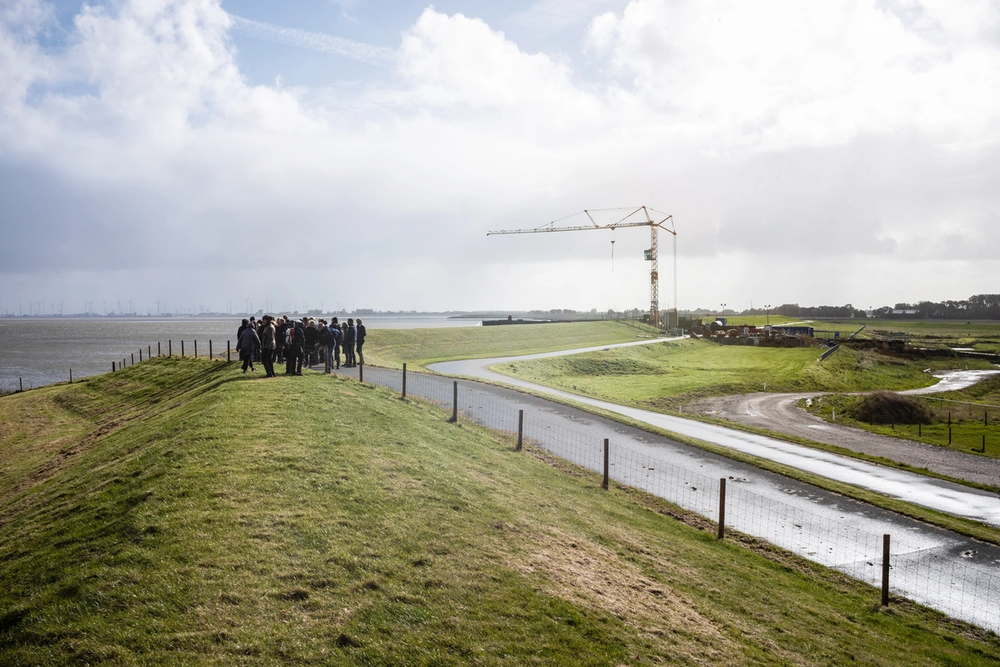
Image 6: DE WAKER Documentation of ‘De Waker’ (The Watcher), public walk and talks with invited guests Carla Alma and Lotte Jensen, 2025 (Photo credit: Wim Dijkman)