The city of Venice is surrounded by the largest coastal wetland in Italy, the Venetian lagoon. Covering 55,000 hectares (ha) and hosting a unique range of biotypes from salt marshes to seagrass meadows, the fate of the city and its encircling lagoon are inextricably intertwined - ‘Venezia è laguna’ (“Venice is its lagoon”) is the motto of WaterLANDS Action Site partner We are here Venice to reinforce awareness on this.
Interdisciplinary artist Claudio Beorchia grew up only an hour from the Venice Lagoon. One of the main aspects that initially drew him to the WaterLANDS project was the prospect of doing something tangible and good for Venice and its lagoon environment. The lagoon faces severe challenges, including extensive loss of salt marsh quality and quantity, ongoing erosion, sediment loss. These problems are exacerbated by urbanisation, erosion from shipping, local water traffic and canal dredging.
“Venice is a city I'm deeply attached to, one I never tire of returning to, one that always offers something new and precious to see, feel, and experience. And it's a city whose fragility I'm aware of, the risks it faces, and the delicate and indissoluble bond it has with its Lagoon.” - Claudio Beorchia
Claudio’s work in WaterLANDS
Claudio is fascinated by the idea of making the invisible visible and focusing on restoration interventions undertaken in parts of the lagoon that are typically not seen or visited. Hidden within the quiet expanses of Venice’s lagoon lie the barene—salt marshes that may go unnoticed to the untrained eye, yet play a fundamental role in preserving Venice’s ecological and cultural identity. From afar, the characteristic little islands that dot the Venetian lagoon landscape don't look like much. But when you get closer, observe them, and carefully walk their uncertain terrain, they surprise and fascinate. They reveal all their rich life, the heterogeneity of the natural elements that constitute them, and the daily dynamics linked to the tides to which they are subject. Each barene is a little world with its own rules, yet profoundly connected to the waters surrounding it. These intertidal salt marshes act as water purifiers, biodiversity havens and carbon sinks and are at the centre of WaterLANDS restoration efforts. Through WaterLANDS, the aim is to accelerate and improve the process of colonisation of the barene by appropriate salt marsh species to maximise ecological performance, especially in terms of carbon sequestration. Taking inspiration from the strategies and techniques implemented by the scientific team, Claudio’s research and work as part of his residency reflects on the restoration of the salt marshes on a metaphorical and poetic level.
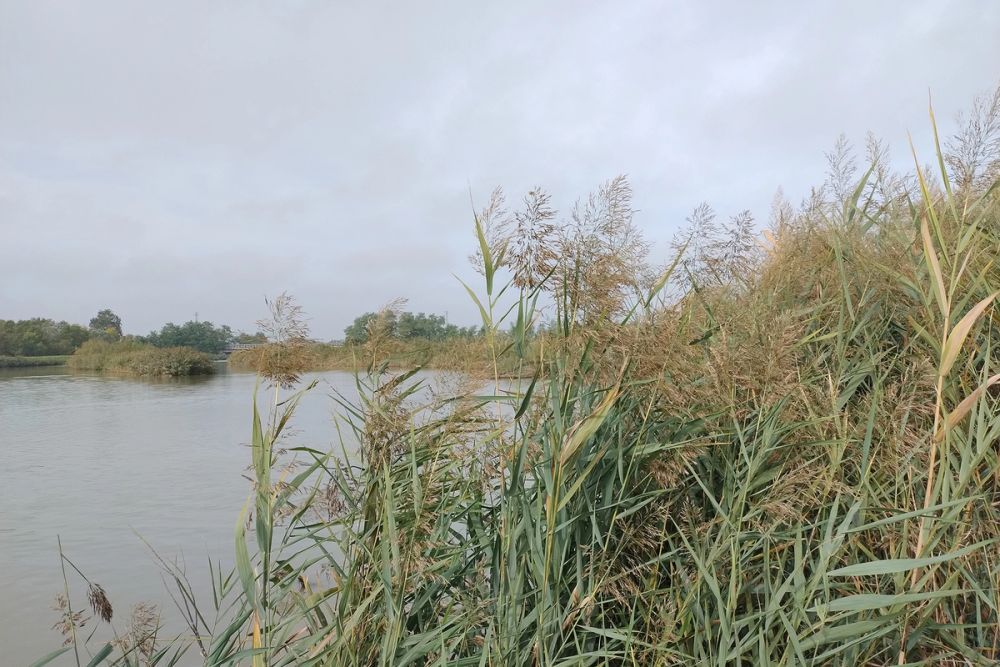
Photo: Cippo’s view of the Venice Lagoon, credits: Claudio Beorchia
Two visions guide his artistic interventions as part of the WaterLANDS artist residency. He wants to reveal a new perspective on the complex and delicate environment of the Venice Lagoon. Due to the city's touristification, the Lagoon is generally represented through stereotypes and clichés, which promote a picturesque image that conceals and omits any critical issues. But the Lagoon environment is highly heterogeneous, with no shortage of peculiarities and problems that, in his eyes, must be highlighted and explored.
Claudio’s second vision is to introduce “play” and playful interaction to understand the barene’s environment and illustrate the restoration efforts undertaken. Play is an intense and powerful human activity. Play promotes deep mental and physical engagement, the sharing of time and space, and the introduction of metaphors and game dynamics capable of evoking and expressing environments and themes. Claudio is working on integrating playful interaction as a means to convey the importance of the lagoon environment and the need to care for it to a wider audience. The elements flowing into the game he is currently designing are a result of a co-design and testing process, which involved the collaboration of local middle school students. The game is still in development, but once completed, it is intended to be played in public spaces with initial plans to play it in Venice’s campielli and in schoolyards.
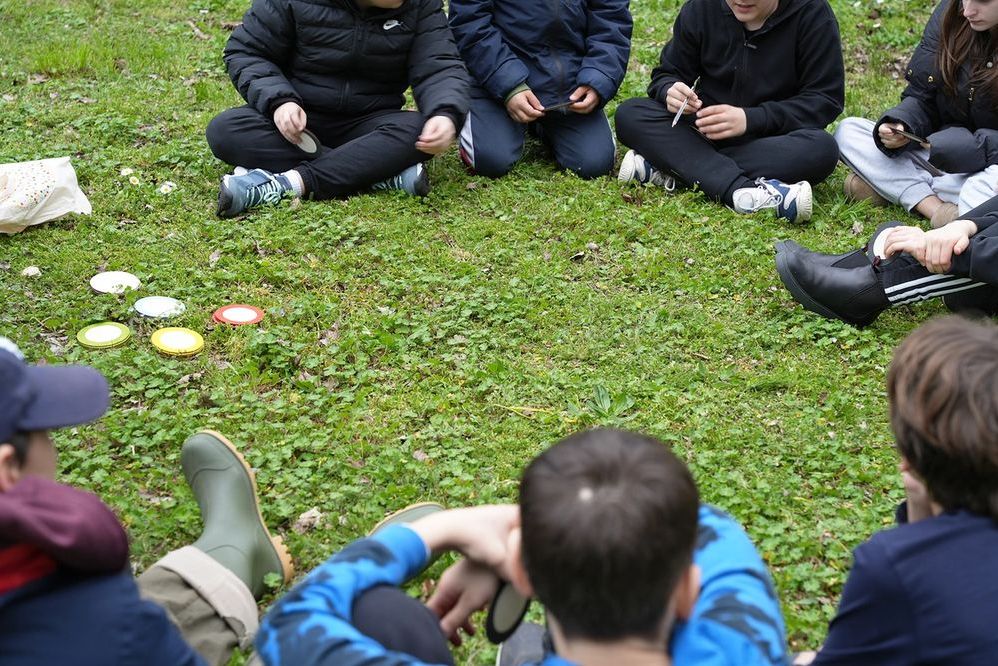
Photo: Game co-design with local middle school students, credits: Eleonora Sovrani
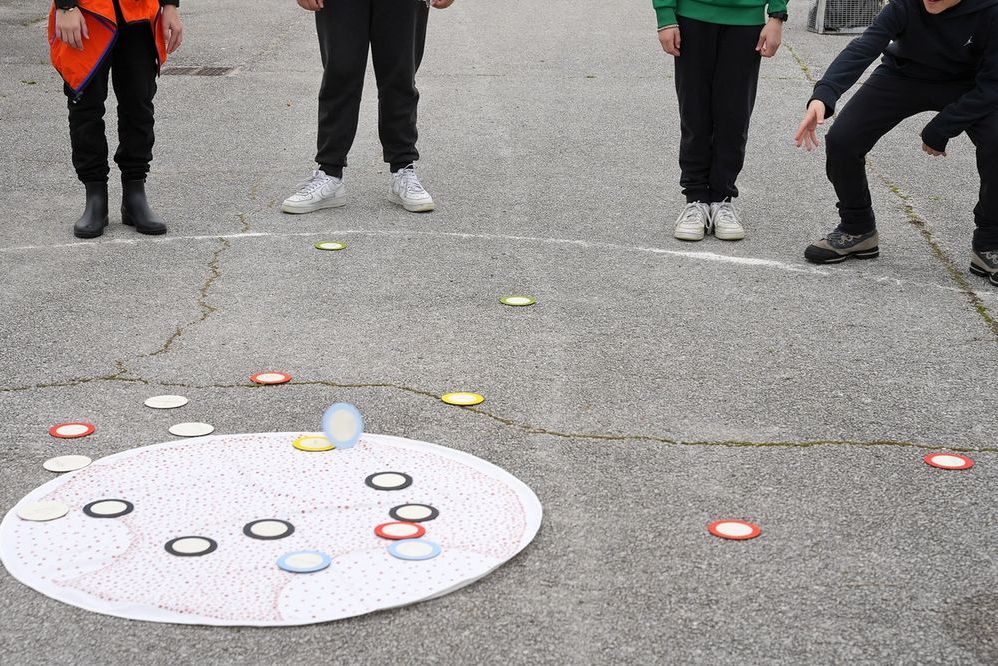
Photo: Game-testing with local middle school students, credits: Eleonora Sovrani
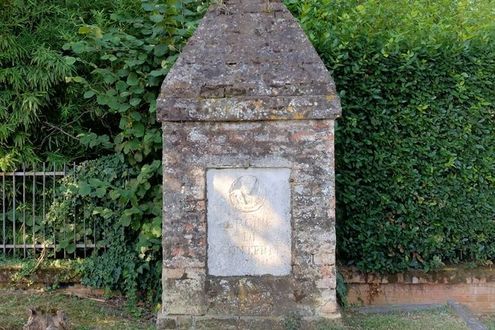
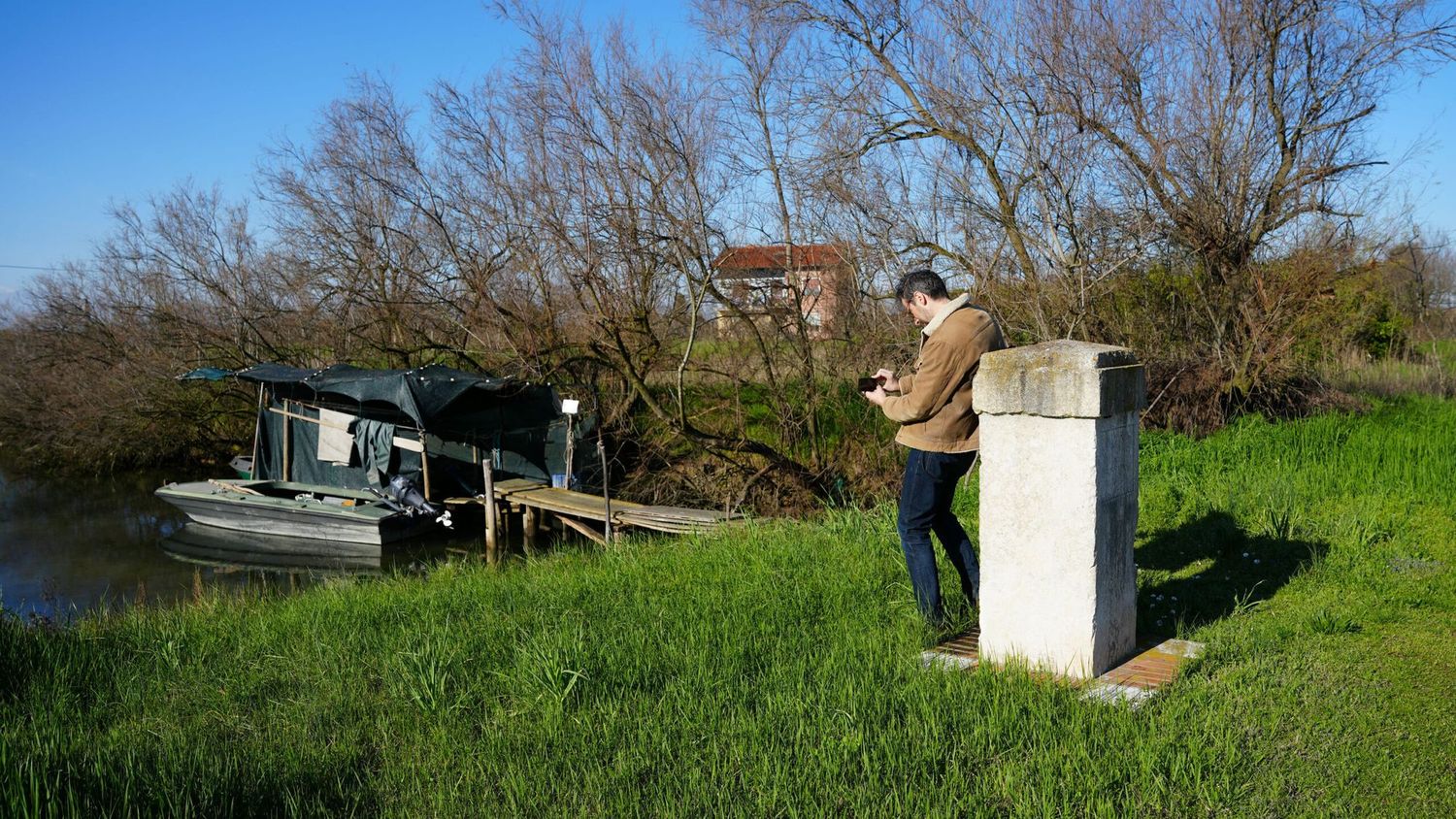
His idea of integrating play into his artistic work has a strong community engagement aspect. This participatory approach also becomes apparent in his “Laguna dei Cippi” project, where local communities play a central role as active actors in his artistic work. The “Laguna dei Cippi” project is a participatory photography project, designed to engage local residents in the discovery and documentation of the Venice Lagoon from an unusual perspective: that of the Boundary Stones (Cippi di Conterminazione). In the late 18th century, one hundred Cippi were placed to physically define the limits of the Venice Lagoon. These stones delineated a legal, administrative, geographical, and landscape boundary between water and land. Originally built from bricks and adorned with an Istrian stone slab featuring the Lion of St Mark, later replaced by stone artefacts, the Cippi have silently witnessed the lagoon’s transformation for over two centuries. As part of the art project, participants are invited to take photographs showing the Venice Lagoon from the perspective of the Lions engraved on the Cippi stones, gathering valuable information to understand the evolution of the lagoon.
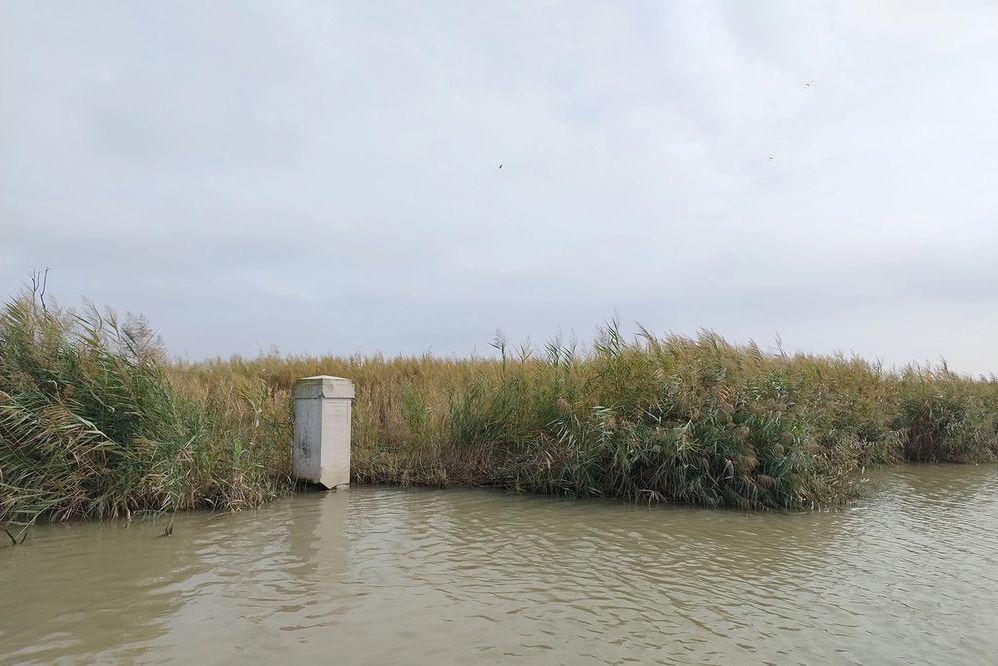
Photo: Cippi stone, credits: Claudio Beorchia
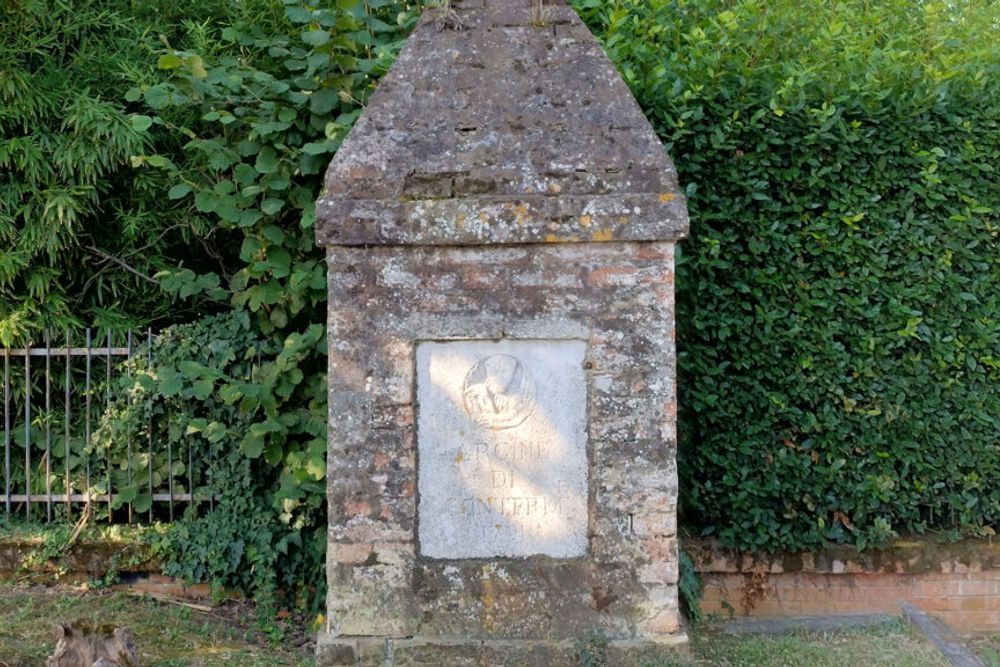
Photo: Cippi stone close up, credits: Claudio Beorchia
Artistic Background
WaterLANDS isn’t Claudio’s first artist residency; he actually takes part in them quite often. It is his preferred approach as it allows him to immerse himself in ever-new environments and themes. Beorchia’s artworks have been exhibited on numerous occasions in Italy and abroad, and often culminate in different forms including poetry, video, collage, sculpture and site-specific installations. One common thread visible across his work in the different residencies is a focus on “site-responsiveness”. He investigates social, landscape, and urban contexts to reveal new and poetic aspects, promoting reflection and awareness among the public and those he involves in his projects. Environmental themes aren't always central to his work, but they are always present as a backdrop, a context, a subtext.
“For any contemporary artist engaged in site-responsive practices and projects strongly tied to specific contexts, the environmental aspect is essential. Whether central or not, environmental issues must be included, considered, and addressed.”
In one of his previous artist residencies themed around the “home as a dwelling, a place to live” in rural Maryland (USA), Claudio focused on featuring people’s porches. He was interested in porches because he sees them as “thresholds” between home and environment - familiar and emotional observation points revealing our relationship with the external landscape around us. Until recently, they were vital spaces, meeting points that connected people with the outside world; now this is often no longer the case, as people prefer other types of social interaction, shutting themselves indoors with air conditioning, preferring to sit in front of TVs and screens. Through his residency, he encouraged residents to reflect on the transformation of their surrounding external landscape and on how the way of living and understanding it has changed.
Especially longer-term residencies, such as WaterLANDS, present a positive trend in his eyes, which has slowly gained in popularity in recent years. As he frames it, institutions, universities and cultural planners are increasingly understanding the importance of including artists' perspectives on contemporary themes and issues and the need to have them work "in situ" and with adequate time, which allows for the sparking of insights and reflections.
“WaterLANDS has the peculiarity of being a very complex project: it develops over an extended period of time, inserts me into a heterogeneous working group, promotes community involvement, and connects me with other artists who are working in environments very different from Venice. Working within such a complex system - which undoubtedly also entails a certain operational difficulty - is a precious thing: precisely because it helps me navigate this complexity, because it allows me to understand the various perspectives from which a problem can be viewed, and because it offers me the opportunity to meet and work with very different people, professionals, and communities. It's a richness I try to introduce and incorporate into other projects I'm working on.”