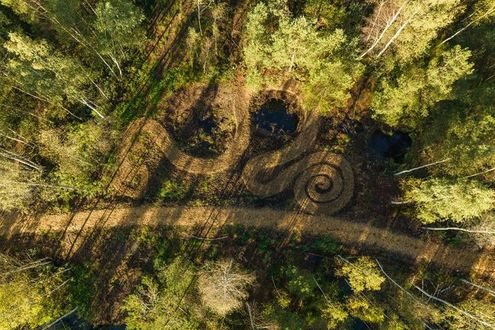
Hero Image: Lavassaare trail with community landscape artwork led by Elo Liiv (Image Credit: Marko Kohv)
The WaterLANDS Estonian Action Site in the Pärnu Catchment has reached an important milestone in peatland restoration with the opening of a new nature trail and viewing platform in the former peat extraction area around Lavassaare, where restoration works were recently completed.
More than 50 people from Lavassaare and the surrounding area attended the opening event. While the new trail offers visitors a chance to witness the early stages of peatland recovery, the celebration also highlighted the role of art in helping communities connect with restored landscapes. Participants explored the trail before coming together to create a large landscape artwork inspired by one of the area's most iconic species: the crane.
The landscape surrounding Lavassaare is naturally rich in peatlands, but decades of peat extraction left large areas drained and ecologically degraded. Between 2024 and 2026, restoration works were carried out to support the recovery of these habitats. Today, the trail invites visitors to observe the changing landscape and discover the signs of a bog returning to life.
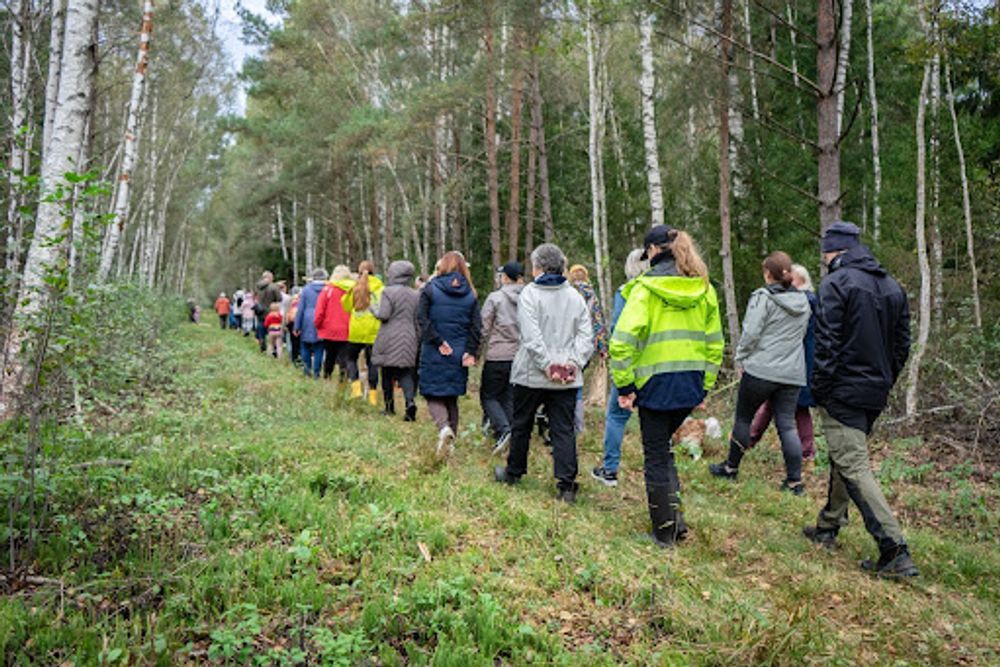
Image 1: Community joining opening of trail (Image Credit: Anna Birgitta Erikson)
Exploring a Restored Landscape
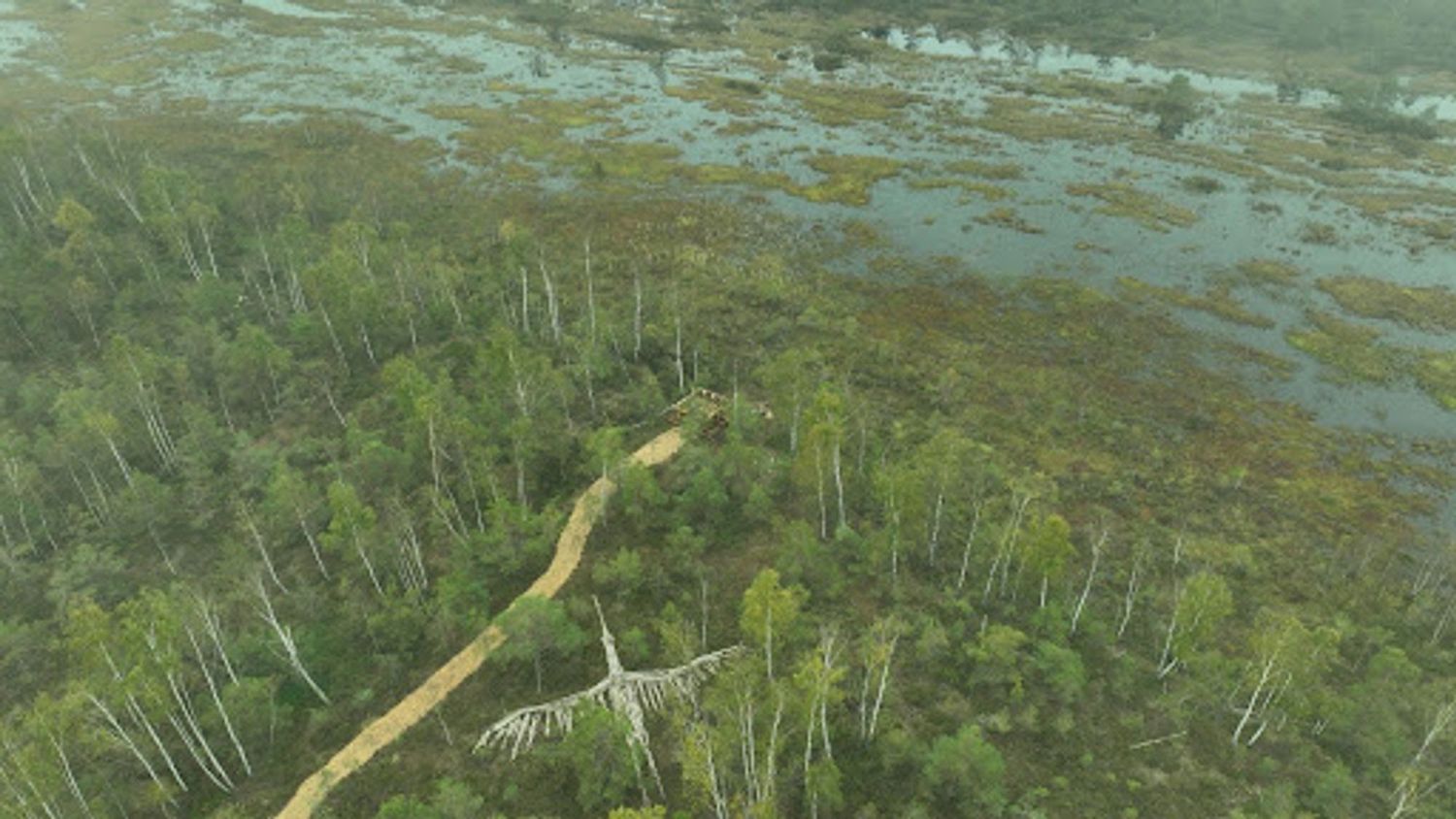
Half of the trail follows the edge of a former peat extraction area, where restoration works have recently been completed. Although vegetation is beginning to reclaim the landscape, traces of its industrial past remain visible, offering visitors a unique opportunity to observe ecological recovery in action. The other half of the trail passes through the historic part of Lavassaare village.
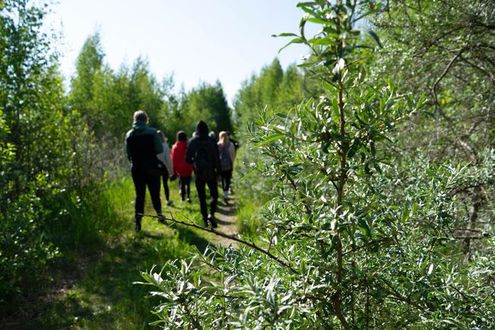
Information points along the route introduce visitors to different peat types, plant communities and bird species found in the area. Through QR codes on the information boards, visitors can also contribute their own nature observations, supporting ongoing scientific monitoring and helping to build a deeper understanding of the recovering ecosystem.
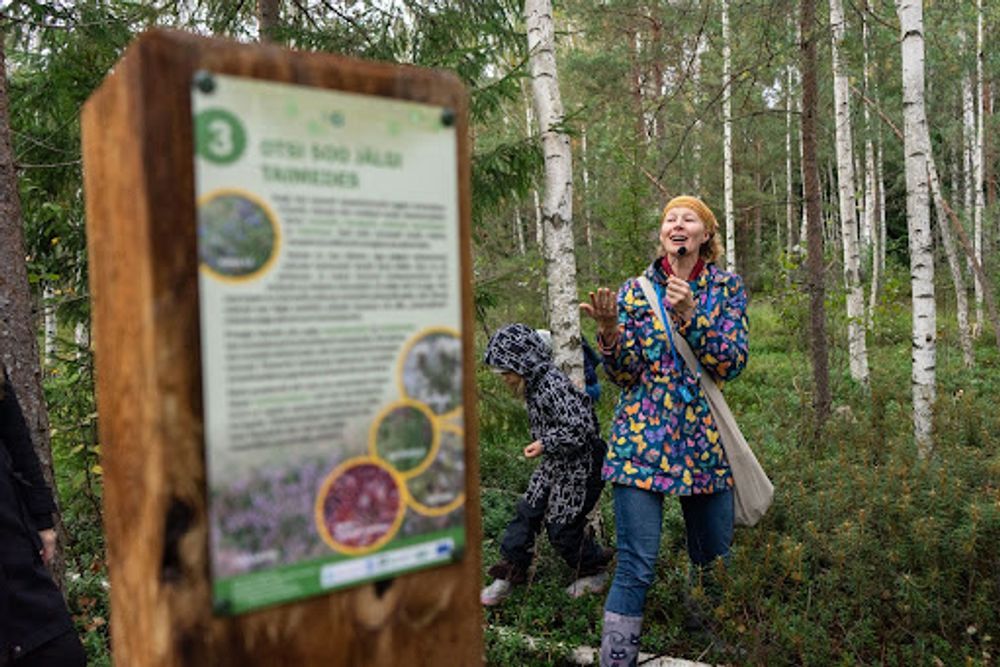
Image 2: Piret Pungas-Kohv introducing bog plants at the opening of the trail. (Image Credit: Anna Birgitta Erikson)
A short wood-chip path leads from the trail to a viewing platform overlooking a former extraction field. Thanks to restoration efforts, the area is gradually developing into a quaking bog, offering a glimpse into the long-term recovery of peatland ecosystems.
Art as a Way of Connecting People and Place
"If you come to the trail at the right time, for example at seven in the evening, you can hear the trumpeting calls of cranes here until early autumn. Lavassaare and its surroundings are a good stopover on the migration routes of many birds, but for cranes it is a particularly favourite spot" said Piret Pungas-Kohv, environmental awareness expert at the Estonian Fund for Nature (ELF).
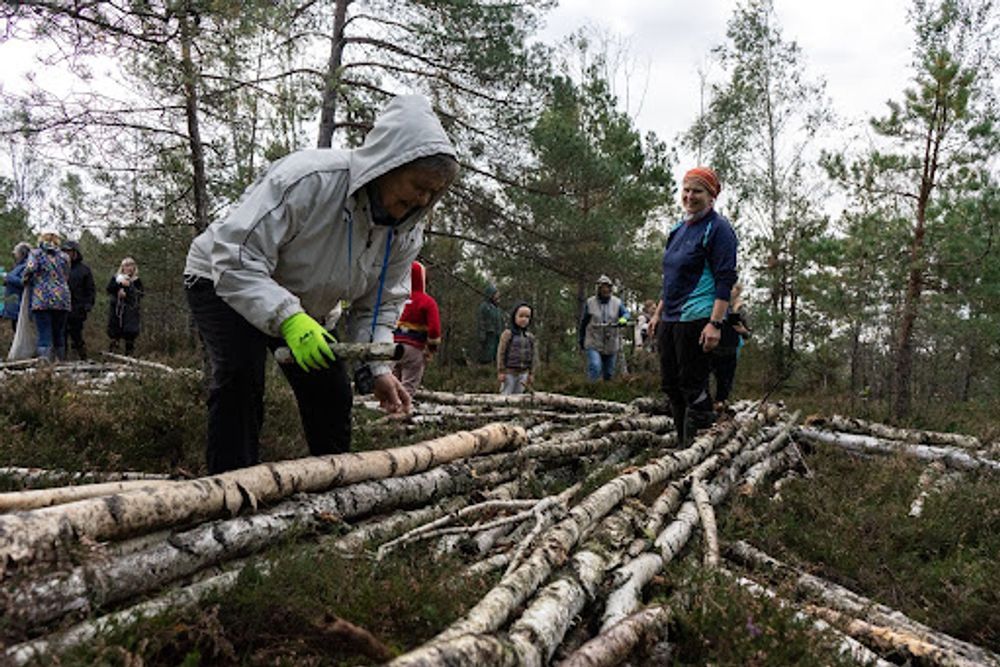
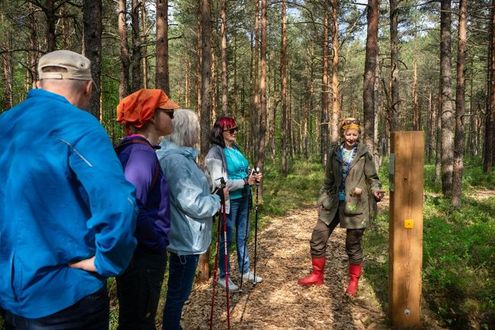
Image 3: Building the community artwork (Image Credit: Anna Birgitta Erikson)
When WaterLANDS artist-in-residence at the Estonian Action Site, Elo Liiv, engaged with local residents, they identified the crane as a symbol of the area. Drawing on these conversations, artist Elo Liiv invited participants to collectively create a large crane-shaped landscape artwork using fallen birch trunks gathered from the site.
The artwork is more than a visual landmark. Constructed through a shared creative process, it reflects local stories, memories and connections to the recovering peatland. At the same time, the natural materials used in the installation provide habitat for insects, linking artistic expression with ecological function.
As the event drew to a close and participants made their way home, they were accompanied by the trumpeting calls of cranes. The trail was developed with support from WaterLANDS. In Estonia, the project is led by the Estonian Fund for Nature, the University of Tartu, the Estonian State Forest Management Centre and Tootsi Turvas AS. Responsibility for maintaining the trail will be taken over by Audru Parish, part of the City of Pärnu.