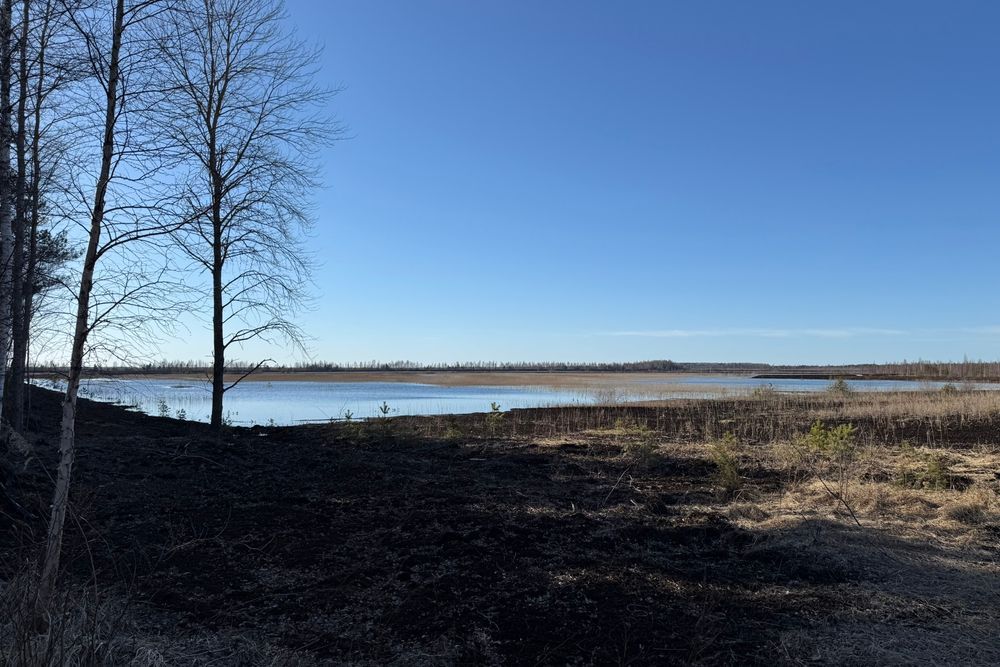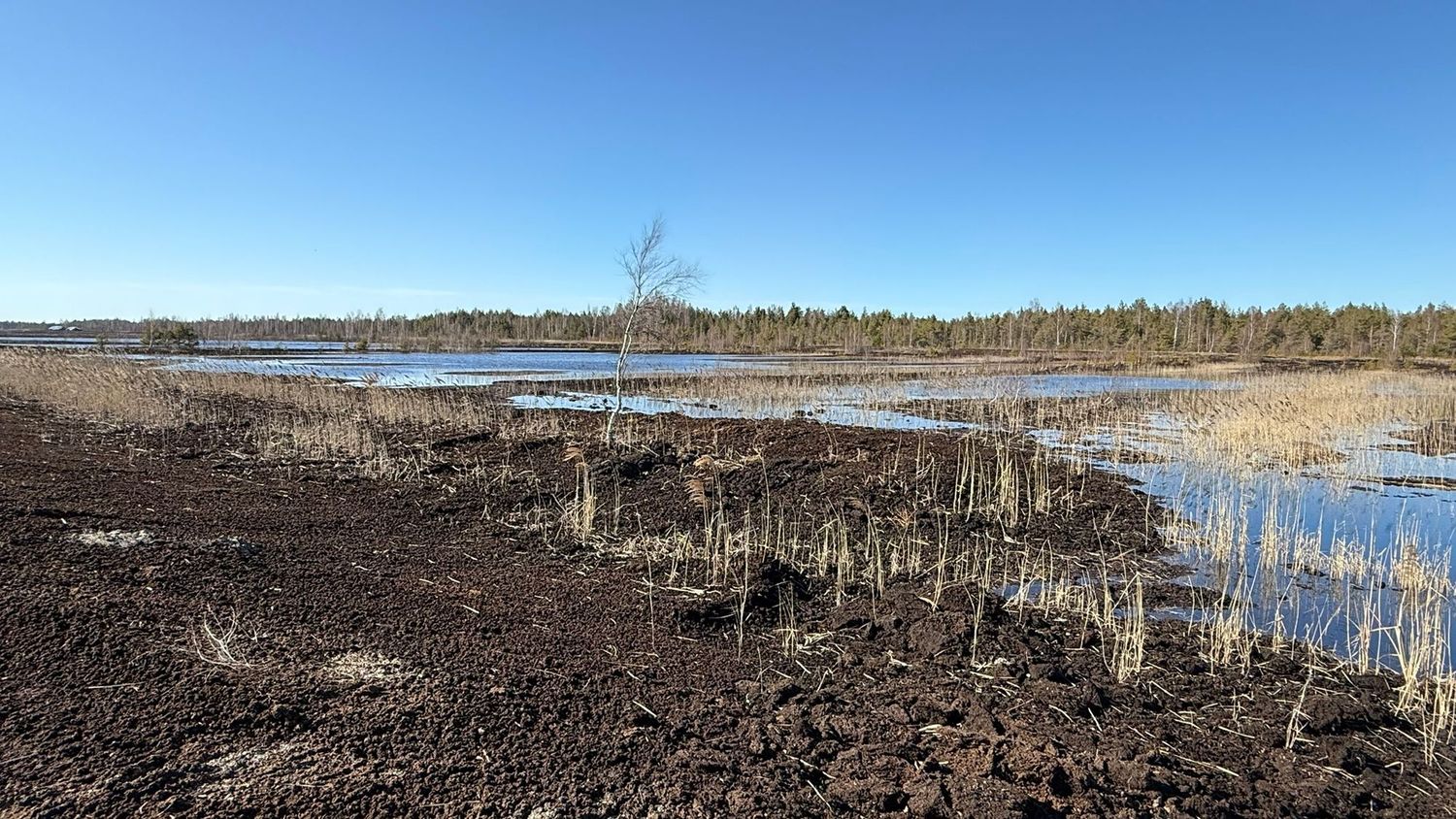
Since our previous update from our Estonian partners, significant progress has been made in restoring the Lavassaare and Elbu peatlands. On the restoration area managed by Tootsi Turvas, a total of 525 hectares of former peat extraction fields are being restored to support the recovery of wetland habitats and ecosystem functions. This is one of the three restoration area's managed by WaterLANDS within Lavassaare, in addition to two more Estonian restoration sites - Kõrsa and Kikepera.
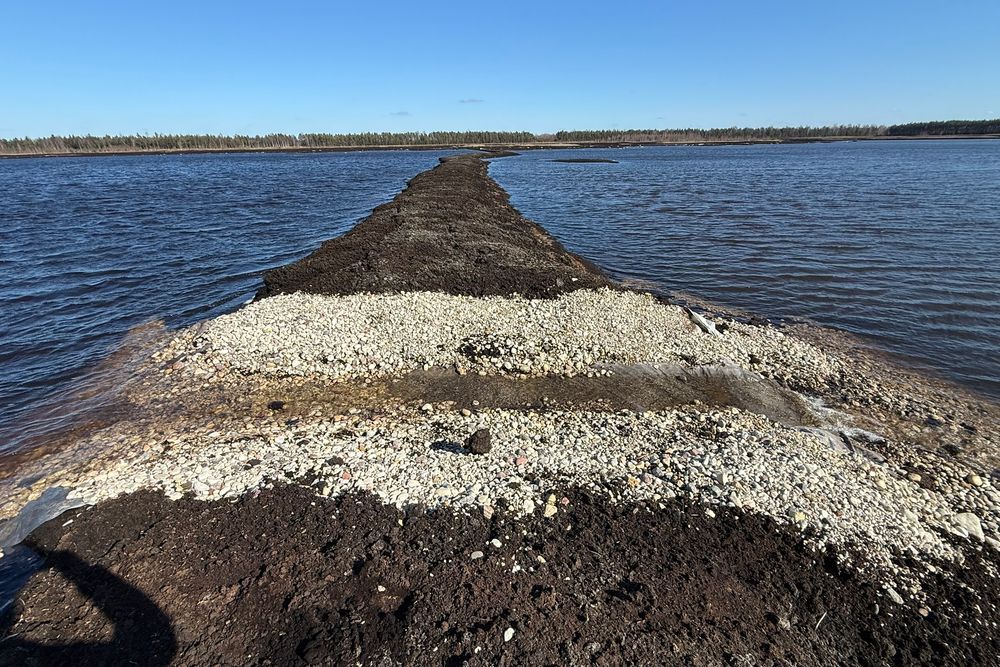
Restoration works have now been largely completed across the site. In the Tootsi Turvas section of Lavassaare and Elbu, 8.3 kilometres of water-retaining embankments were constructed, alongside 63 dams, 38 overflow structures, and 400 metres of boardwalks. To help raise water levels and re-establish wetland conditions, approximately 209,000 m³ of soil was moved to fill and level drainage ditches.
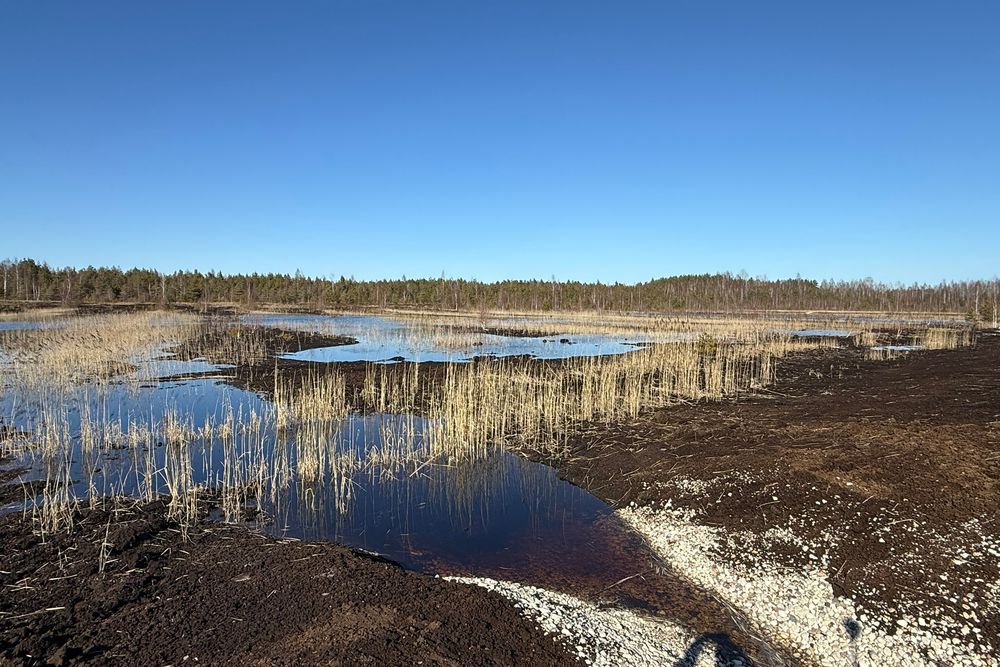
With the engineering works now complete, trees have been planted and only the final phase of restoration remains. This biological restoration stage will focus on supporting vegetation recovery, including sowing seeds in areas where natural revegetation is limited.
Restoration Progress and Methodology
Physical restoration activities at the Lavassaare and Elbu peat extraction areas began in December 2024. Work started in the northern part of the site, where water-retaining embankments were constructed to slow drainage and restore wetter conditions. Overflow structures were installed afterwards, followed by ditch infilling and the removal of drainage pipes.
These measures are designed to raise the water table and create the conditions needed for peatland vegetation to recover over time.
Preparing for Biological Restoration
As part of the next restoration phase, Tootsi Turvas plans to apply ash to selected areas to help accelerate vegetation establishment. This approach has been successfully used in Finland, but has not previously been implemented for peatland restoration in Estonia.
To assess its suitability, Katri Ots, a researcher at the Estonian University of Life Sciences with extensive experience studying the use of ash and ash mixtures in peatland afforestation, carried out an expert evaluation. Following this assessment, the Environmental Board approved the proposed use of ash.
The assessment examined the most appropriate fertilizer type for the restoration area, the quantity and extent of application required, and the environmental threshold values beyond which negative impacts could occur.
A key consideration is ensuring that nutrients remain within the restoration area and do not enter surface water or groundwater systems, where they could contribute to eutrophication. The approach has therefore been designed to maximise the benefits for vegetation recovery while avoiding adverse environmental impacts.
All restoration works at the site are expected to be completed by the end of 2026.